







Are you reluctant to cook eggs that are lying around in the fridge? Before you throw them out as a precaution, you should know that there are some simple and reliable ways to find out if they're still good. Nobody wants to get sick, but nobody wants to waste anything either! Thanks to a few home-made tests, you can check the freshness of your eggs in just a few minutes, without breaking them.
In this article, find out how to recognise an out-of-date egg, how to store them properly, and above all how to avoid food waste while cooking in complete safety.
Egg dates and markings: Best-before date to D+28, extra-fresh to D+9
The best-before date for eggs is generally set at 28 days after laying, and the words extra-fresh is valid until the 9th day. This information appears on the box.
After the MDD, redouble your caution, carry out the tests below and opt for a complete cooking. Want to understand more about What's the difference between BBD and DDM? Read our article!
How can you tell if an egg is good without breaking it?
A questionable egg doesn't necessarily mean it's out of date. Before throwing it away or cooking it, there are a few simple steps you can take at home to check its freshness. You can combine these tests for added safety.
The water test: does the egg sink or float?
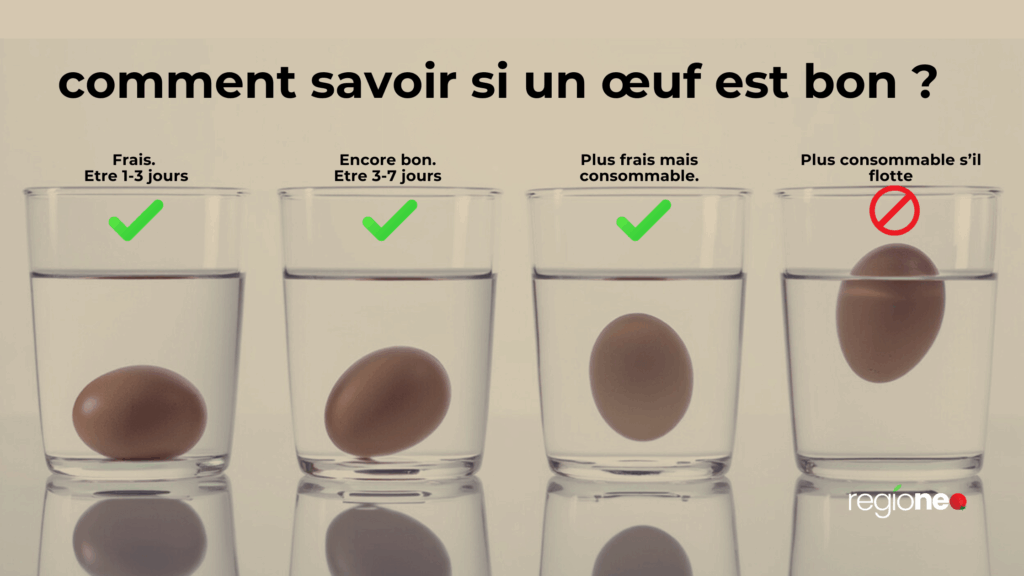
A well-known trick is to immerse the egg in a container filled with cold water. This test is based on a natural phenomenon: over time, the air pocket inside the egg expands as moisture evaporates through the porous shell, making the egg lighter and altering its buoyancy.
Here's how to interpret the three possible results:
L’egg sinks and remains at the bottom, flat It is very fresh. You can eat it without risk, even raw, in a tiramisu or homemade mayonnaise.
The egg partially straightens or floats between two waters It is less fresh, but still edible. Favour preparations that require thorough cooking: hard-boiled eggs, cakes, quiches or well-cooked omelettes.
The egg floats completely on the surface It is too old and may present health risks. Before throwing it away, you can carry out other tests (visual and olfactory): if the white is runny, the yellow is collapsed, or if you smell something unpleasant, throw it away immediately.
If not, you can eat it well cooked, although this is not recommended. An expired egg will find a second life in your compost or as the basis of a nourishing hair mask!
Visual and olfactory examination: break the egg into a bowl
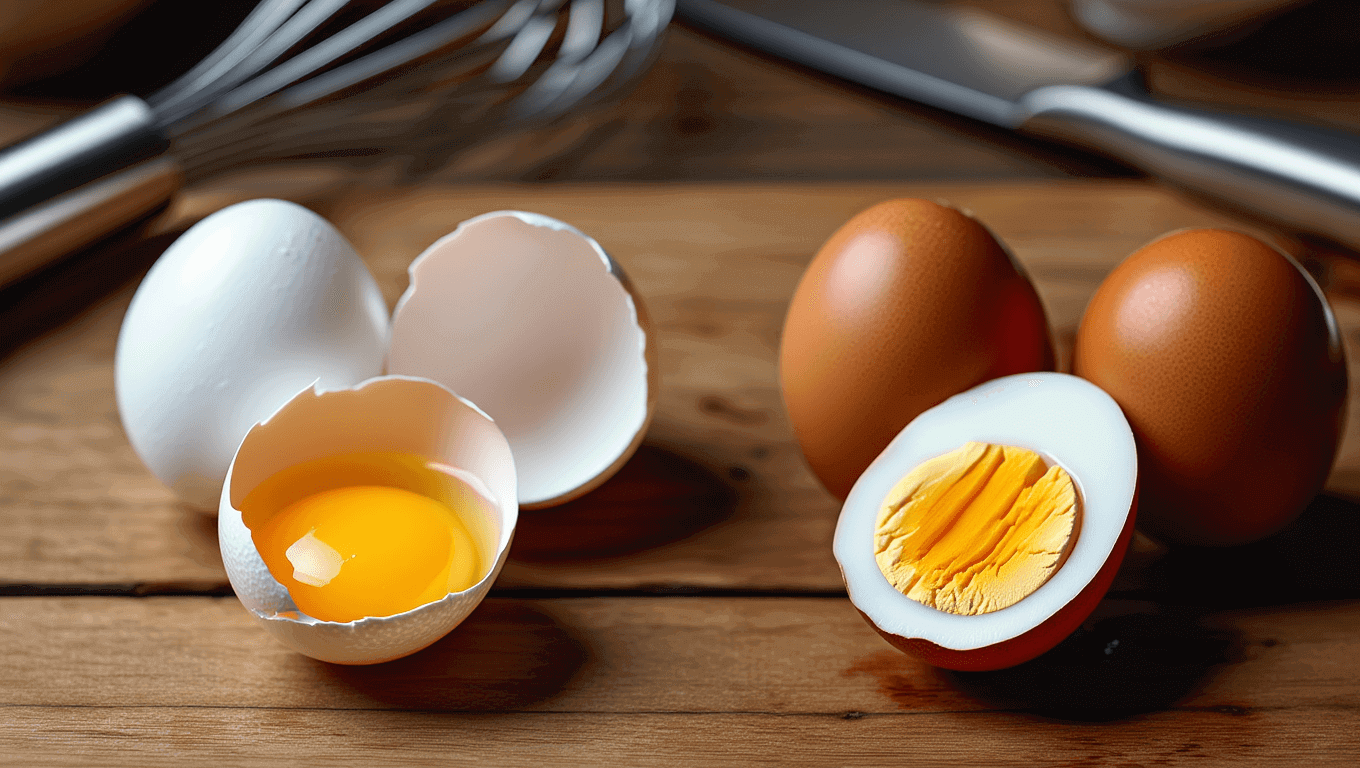
The most reliable way to judge the freshness of an egg is to break it in a clean container. A fresh egg has a bulging yolk, well centred, surrounded by a thick, thin white.
An older egg, on the other hand, can be recognised by its flattened, fragile yolk and very runny white that disperses widely.
The smell is an essential indicator: if it is strong, sour or sulphurous, the egg should be discarded without hesitation. On the other hand, the presence of small bloodstains is not dangerous. You can simply remove them if their appearance bothers you.
Shell inspection: first signs of freshness
Even before you break your egg, you can observe its shell. A crack, a sticky surface or visible dirt may indicate contamination. In this case, it's best not to take any chances.
Your sense of smell can also alert you: an unpleasant odour, even a discreet one, is enough to rule out an egg. Finally, if you shake it gently close to the ear, the sound of liquid can indicate that it has aged.
This test remains approximate and must be confirmed by other methods.
How can you store your eggs properly and do the responsible thing?
Good storage limits losses and avoids risks. Temperature, location and stock rotation all make a difference. When the sell-by date approaches, plan recipes to avoid wasting anything.
To find out more about anti-gaspi, explore the practical solutions to combat food waste.
In the fridge, in the box, point downwards
Keep between 4 and 6 °C, preferably in their box, to protect them from odours. The yolk should remain centred at the bottom. Remove the egg just before use to avoid condensation.
Do not wash, but wipe if necessary
The cuticle provides natural protection. If an egg is dirty, wipe it gently. If it has been washed, keep it cold and eat it quickly, well cooked.
Everyday anti-gasp: rotation and adapted recipes
Make a note of the date of purchase and apply FIFO (first in, first out). When the sell-by date approaches, prepare boiled eggs, quiches, cakes and pancakes. Avoid raw preparations with aged eggs. You can also understand the main causes of food waste to take action on a daily basis, in the kitchen and for supplies, with this article on causes of waste and solutions for taking action.
Découvrez aussi notre article qui vous aide à distinguer un œuf cru d’un œuf dur.
FAQ
Can you eat an egg after its sell-by date?
Yes, but with care. After D+28, check its freshness using the water test, visual inspection and smell. Make sure it is cooked all the way through.
Is a floating egg necessarily out of date?
Not always. It's probably old, but if it doesn't smell or look abnormal, it can still be eaten cooked. If in doubt, it's best to throw it out.
Are blood spots in eggs dangerous?
No. They are caused by a small rupture of a vessel during egg formation. You can remove them if their appearance bothers you.
Should eggs be washed before storage?
No. The shell is protected by a natural cuticle. If an egg is dirty, wipe it dry just before use. A washed egg should be kept cold and eaten quickly.