


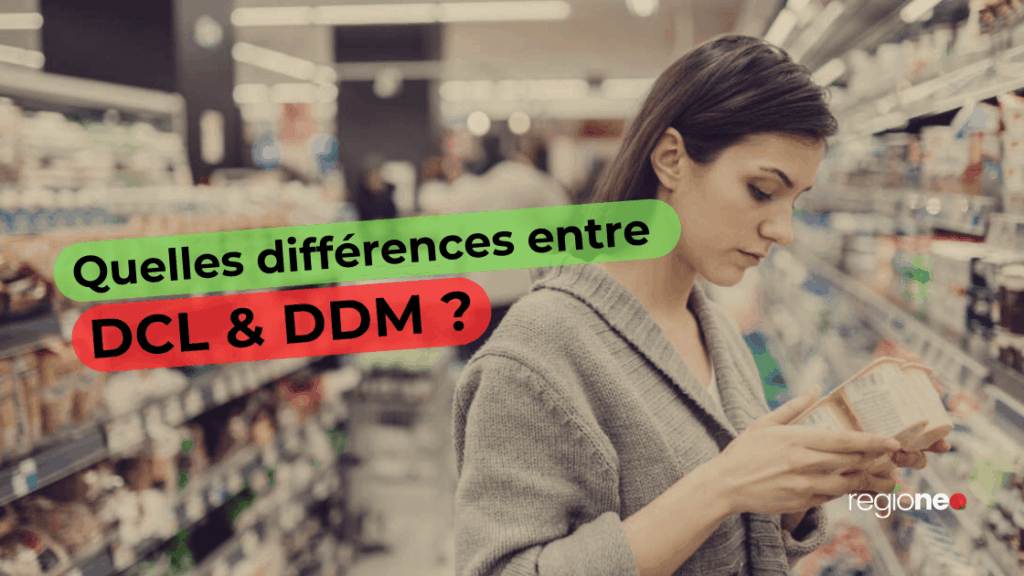
Knowing how to distinguish between best-before and sell-by dates has never been more important, for producers and consumers alike.
These two abbreviations really do guide the storage, sale and promotion of products in the short supply chain. A clear understanding of them will help you eat more healthily, ensure the safety of the food you consume and limit food waste.
At a time when short distribution channels and the fight against waste are taking on their full meaning, managing these dates is becoming a key issue for everyone.
Definition of BBD (use by date)
La BBD, or use-by date, The “best before" date appears on highly perishable foods: meat, fish, fresh ready meals and certain dairy products. In practical terms, this date can be identified by the words "to be used until”. In other words, after this period, eating the food may entail health risks, as it may become unfit for consumption through microbial proliferation.
It is forbidden to sell or consume a product after its use-by date, even if it still looks OK visually.. This rule protects food safety, especially for sensitive products.
To find out more, visit the public service on CSD details these obligations and their potential penalties. Professionals must therefore take extreme care to avoid contamination or endangering consumers.
DDM (Date de Durabilité Minimale): meaning and specifics
La DDM, or Date of Minimum Durability, This mainly concerns “dry” products or those that have undergone a treatment to ensure their stability: biscuits, cereals, pasta, preserves, coffee, chocolate, etc.
It can be identified by the wording“best before”. Once the best-before date has passed, the product may lose its crunchiness, flavour or vitamins, but there is no health risk if the packaging is intact.
This The fundamental difference with DLC is that it simplifies management and avoids the need to dispose of waste. products that stay healthy.
A best-before date never leads to the product being systematically withdrawn from the market: it's the quality that goes down, not the safety.
The confusion between BBD and BBD for producers and consumers
Mixing best-before and sell-by dates risks increasing unnecessary waste or, worse still, exposing consumers to health risks. Some consumers wrongly throw out products with a best-before date even though they are still good.
As far as professionals are concerned, selling a product beyond its best-before date is not tolerated, whereas for a best-before date, it is perfectly possible, which is why it is so important. opens the door to anti-gaspi offers.
Solutions Regioneo's anti-waste is the answer to this problem. A platform that can intelligently manage sell-by dates, quickly produce specific offers to promote products that have passed their sell-by date, and automatically adjust prices or create attractive batches to give a second life to unsold goods.
Practical advice for managing best-before and best-before dates in short distribution channels
- Clearly display the best-before date and sell-by date on each product sheet.
- Promote products with upcoming DDM with discounts and gourmet kits.
- Reduce stocks with real-time alerts on your dashboard.
- Reserve anti-gaspi offers for products that have passed their sell-by date but are still healthy.
- Use a “first in, first out” rotation for products, so that stocks don't become outdated.
- Use the flexibility of the short distribution circuit to quickly distribute or process surpluses close to the dates.
Producers and retailers who rely on short distribution channels are often more responsive. This makes it possible to act locally and add value to every product, even those with a best-before date, which is not always possible in supermarkets.
FAQ
DLC stands for "date limite de consommation" and DDM stands for "date de durabilité minimale".
The DLC is for very perishable products: after this date, they can become dangerous to health, whereas the DDM indicates the period during which a product retains its qualities but remains edible after the date.
Can a product be consumed after its expiry date?
No. Consuming a product after its expiry date is forbidden because it can become unfit for consumption due to microbial proliferation.
Can I use a product after the sell-by date?
Yes, if the packaging is intact and the product has no visible defects or suspicious odours.
Are there any strict regulations on DDM?
The DDM is mainly concerned with taste and nutritional quality, not with health safety like the DLC.
D'abord, qu'est-ce que la DLC ? La DLC, ou date limite de consommation, est une date fixée par le fabricant qui indique jusqu'à quand un produit peut être consommé en toute sécurité. Elle est apposée sur les produits périssables qui présentent un risque pour la santé des consommateurs s'ils sont consommés après cette date. Il s'agit par exemple : Des produits laitiers (yaourts, fromage frais, etc.) Des viandes fraîches et de la volaille Des poissons Des plats préparés Des œufs Des fruits et légumes prêts à consommer Des produits surgelés Des produits de boulangerie et de pâtisserie sortis du four le jour même En cas de doute pendant la préparation de vos repas lors de l'utilisation d'un produit dont la DLC est proche, vous pouvez demander conseil à votre magasin.
Meat, fish, fresh ready meals, certain dairy products… in short, all highly perishable foods.




How is Regioneo helping to combat waste?
By facilitating the sale of short-dated products and making anti-gasp tools available to producers.