





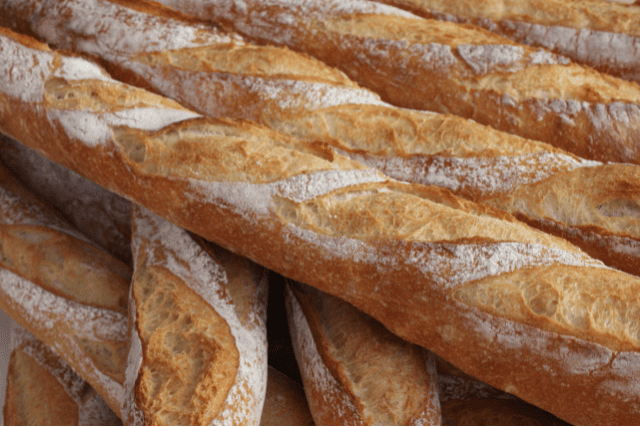
And if a powerful symbol of French culture, the bread baguette, was changing size for an essential cause: the fight against food waste ? With recent studies pointing the finger at the large quantity of bread thrown away every day, a proposal is emerging: reduce the size of baguettes to better adapt supply to actual consumption.
At Regioneo, In a world where a commitment to local and responsible food is central, this reflection echoes the values we live by every day. In this article, Regioneo takes a look at this new anti-waste option being considered by many.
Bread wastage in France: a major issue
Bread is one of the most wasted foods in France. According to the’ADEME, 10% of national bread production would end up in the bin. This represents around 150,000 tonnes per year, the equivalent of several million baguettes of bread. The cause: buying too much bread, using unsuitable formats or storing it incorrectly.
This observation is prompting more and more people to rethink our eating habits. Because beyond the economic aspect, this waste has an environmental cost: discarded bread means wasted water, energy and labour.
A proposal to reduce the size of baguettes
In response, a number of studies and initiatives are proposing a review of the standard baguette format. The idea is to offer smaller baguettes, more suited to the actual daily consumption of households. This could help to limit the amount of uneaten leftovers and, consequently, food waste.
Shorter or thinner formats already exist in some artisan bakeries (strings, half baguettes, individual loaves) but are still in the minority in supermarkets and supermarkets. distribution channels. The question is whether these formats could become the norm.
A smaller baguette could be part of a more global trend: offering fairer portions, encouraging consumption in line with real needs, while reducing environmental impact.
What impact will a smaller baguette have on producers?
A change in the size of the baguette would have repercussions for the industry. Bakers could have to change their practices: adapt recipes, reorganise daily production, study profitability, etc.
For the cereal producers, The challenge is not just one of volume, but also of value. Better management of food flows, more measured consumption and reduced wastage can encourage more sustainable, more resilient agriculture that is more firmly rooted in the local area.
Reducing waste does not necessarily mean reducing production: rather, it means rebalancing the balance between production, processing and consumption.
Regioneo's commitment to responsible consumption
Food that is more local, fairer and more respectful of the environment starts with small, practical gestures. Favouring short distribution channels and encouraging consumption that meets real needs are at the heart of Regioneo's mission.
Regioneo promotes producers who are committed to limiting waste, whether through the redistribution of unsold produce or the use of local raw materials.
Towards a new consumer standard?
Reducing the size of chopsticks is perhaps not just a question of format. It has to do with the perception of eating habits, It's about the way products are thought about, produced and consumed. This subject invites a broader reflection: can we reduce waste without compromising food traditions? Is it up to supply to adapt to demand, or consumption to adjust to ecological constraints? How will all the players in the production chain be affected?
Will the smaller baguette become a new standard in the years to come? Or will it remain a one-off initiative in the face of the complexity of food waste? The answer will no doubt depend on collective choices, but also on the little things we do on a daily basis.