




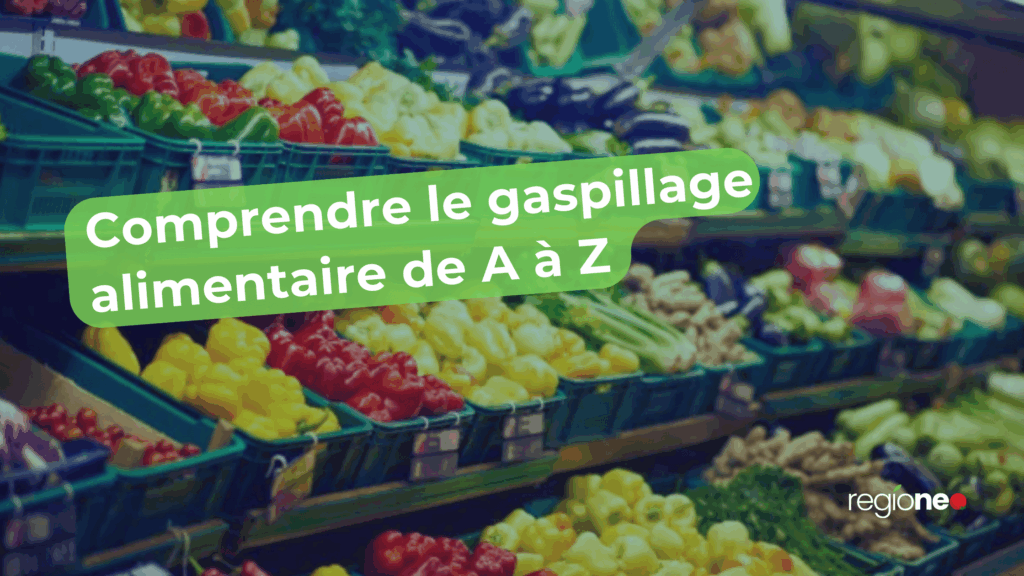
Every year in France, millions of tonnes of food are wasted, at a time when many households are living in precarious conditions and producers are struggling to make the most of their crops. While food waste is a global concern, it takes on a particular significance for professionals involved in short distribution channels. Many are looking for practical, effective and rapid solutions that combine digital innovation and local commitment, such as platforms like Regioneo makes it easy to sell direct and reduce waste.
Understanding food waste: definitions, issues and key figures
Le food waste It spares no actor in the chain. The consequences are ecological, economic, social, and ethical. To act more effectively, we must understand what is at stake behind these losses.
Definitions and origins of food waste
La FAO distinguishes between food loss that occurs before the product reaches the consumer (problems with harvesting, storage, transport, processing) and wastage «stricto sensu», which concerns what is thrown away during distribution or by the final consumer.
In Europe as in France, food waste encompasses all food that was originally intended for human consumption, but which, for various reasons (defects in appearance, expired dates, incorrect sizes), never ends up on a plate.
Waste occurs at every stage:
- Agricultural production (small size, surplus not harvested)
- Processing (surplus, non-standard sizes)
- Distribution (unsold products, products close to sell-by dates)
- Consumption (table scraps, poor stock management at home)
Key figures for France and the rest of the world
In France, around 10 million tonnes of food are lost or thrown away every year. This represents almost 150 kg per inhabitant, almost half of which could be avoided. Households remain the main source of waste, followed by processing, catering, distribution and production.
Around the world, almost one third of food production that is never consumed, i.e. 1.3 billion tonnes every year. This figure is staggering, especially as it coexists with hunger affecting hundreds of millions of people.
Environmental, economic and social issues
Throwing away food also wastes all the resources used to produce it: water, farmland, energy and labour. Food waste is thought to be responsible for 3 % of greenhouse gas emissions in France, In fact, it accounts for 7 % of global emissions. Unsurprisingly, ecological pressure is high.
In economic terms, it is estimated that waste costs around 16 billion euros a year in France, an amount that weighs heavily on farmers and manufacturers, but also on every household.
Beyond the figures, it raises real questions of equity: when 1 in 9 people suffer from undernourishment, how can we tolerate this absurd waste of resources?
For professionals who want to take action, find out more about your practices with an expert, thanks to the Food wastage guide CTC-PA.
Practical solutions to reduce food waste at every stage
Every player has a role to play, from the field to the plate. Innovations and digital tools, particularly for short distribution channels, now offer real scope for manoeuvre.
Actions by producers and innovations in short distribution channels
For producers, anticipating demand and making the most of unsold produce are essential. Some choose to diversify their outlets or organise direct sales of so-called «ugly» products. Using modern management tools, such as those offered by Regioneo, helps to limit surpluses and manage stocks more effectively.
Create an e-commerce site in less than 24 hours, easily manage your catalogue and offers, and you'll be able to react quickly and adapt, even in the event of a heavy harvest or unpredictable weather. Discover Regioneo's features.
Anti-waste offers and direct sales: optimising distribution
Direct sales and anti-gasp baskets bring producers and consumers closer together, while adding value to produce that might otherwise have been excluded from traditional channels (fruit that is «out of size», imperfect vegetables).
Thanks to digital platforms, you can better manage use-by dates, launch targeted promotions and offer low-price baskets to sell off your stocks intelligently. Segmented offers allow you to sell off unsold stock while building loyalty among consumers, who are often sensitive to the anti-gaspi cause.
Responsible consumption: the role of households and digital technology
Households remain one of the biggest levers for reducing waste. Planning what to buy, cooking leftovers, understanding best-before dates - these are just some of the simple things you can do to prevent waste on a daily basis.
Today, digital technology is making a real difference. Apps for signposting discounted offers, platforms for listing products close to their sell-by date, recipe ideas for using up leftovers or organising your cooking... Digital technology makes it easier to take collective action.
The catering industry is also adopting new practices, monitoring the quantities thrown away and adapting menus to reduce waste, but there is still a long way to go.
In this context, everyone needs to rethink their habits, whether they are producers, retailers, restaurateurs or end consumers.
FAQ
What is food waste?
Food waste refers to any food intended for human consumption that is lost, discarded or degraded at any stage of the food chain, whether it be production, processing, distribution or consumption.
How much food is wasted in France?
In France, in 2023, 9.7 million tonnes of food waste were produced, which is 142 kg per inhabitant. Of this, 3.8 million tonnes of still-edible food are actually wasted, which translates torepresents 55 kg per inhabitant per year.
What is the environmental impact of food waste?
Wasting food means wasting the resources needed to produce it, such as water, farmland, and energy. In France, food waste is reportedly responsible for around 3 to 4.2 % of national greenhouse gas emissions, which makes it a major environmental issue, even though it could largely be avoided
Do short supply chains really reduce waste?
Yes. By directly connecting producers and consumers, Short circuits promote products that might otherwise have been discarded for aesthetic or logistical reasons. They limit unsold goods and reduce intermediaries, which helps to reduce waste while supporting local producers.





How to reduce waste at home?
At home, everyone can play their part by planning their meals and shopping, and by storing food correctly. The actions are simple, but their combined effect is significant.