
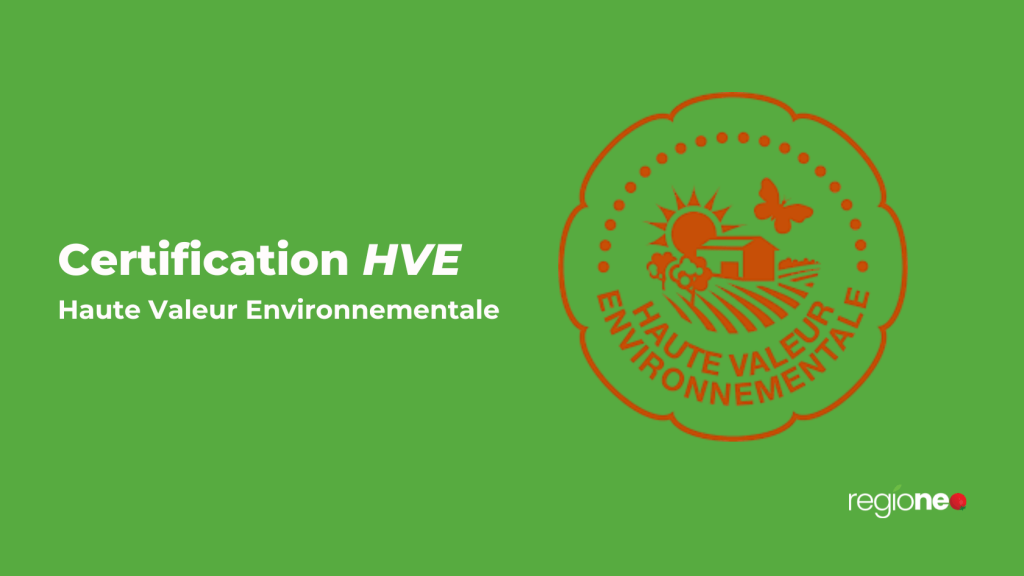
Among the many Food labels and quality marks, the HVE certification holds a special place. Unlike labels that regulate a product or a recipe, it certifies the entire’a farm on its environmental practices.
But what exactly does it guarantee? And what's in it for fruit and vegetable producers selling through short supply chains? We'll explain everything.
What is HVE certification?
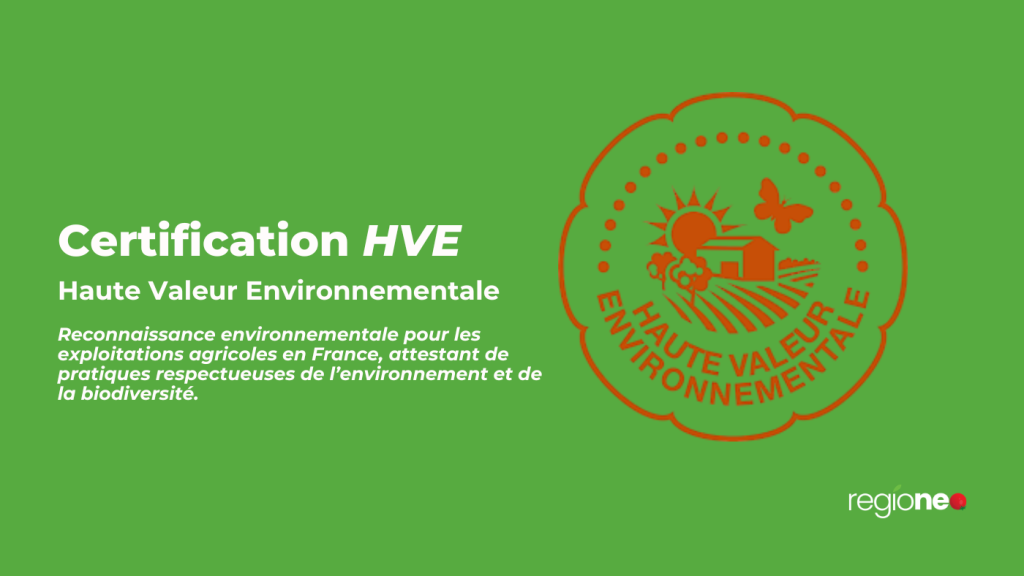
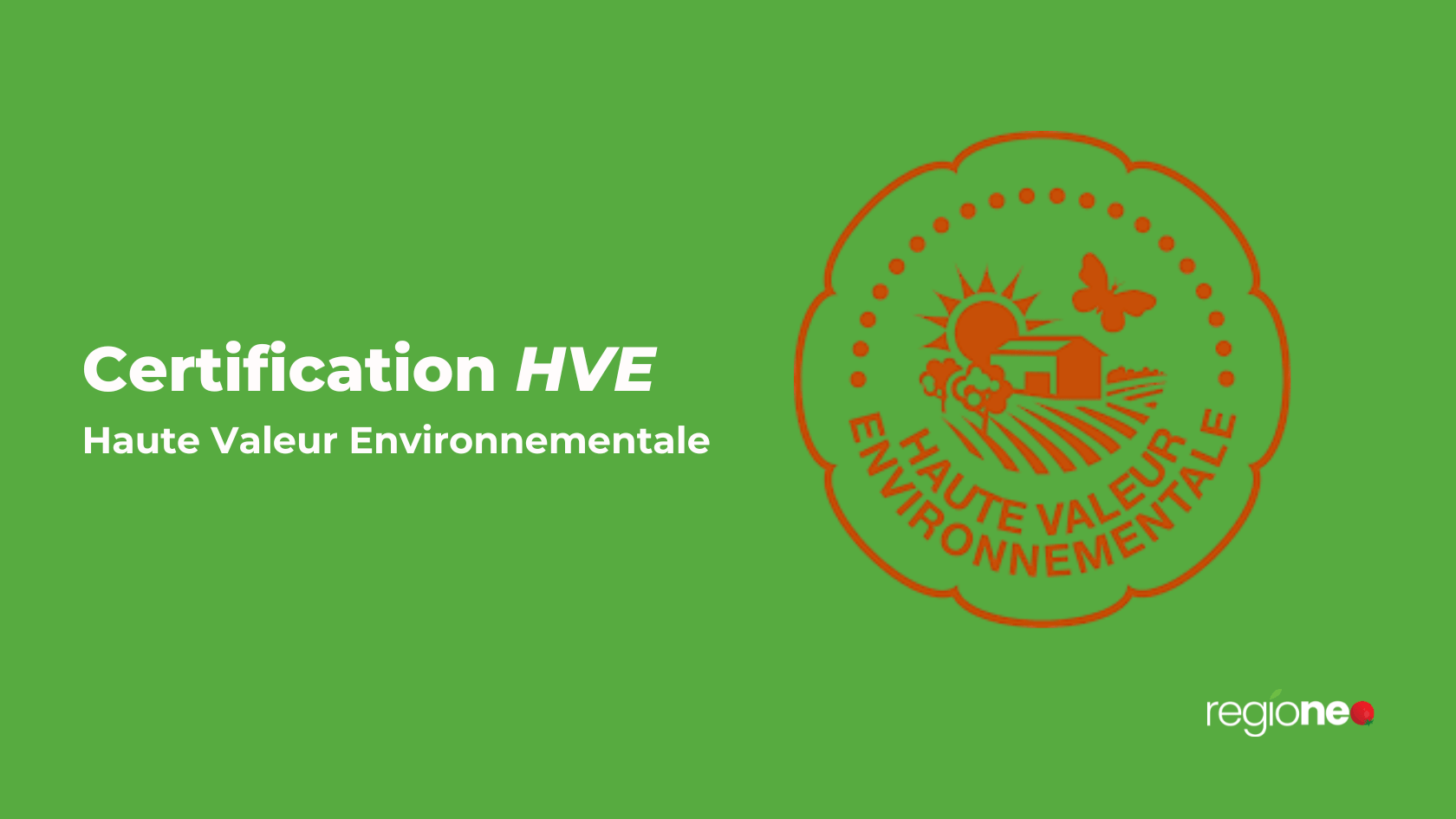
The certification HVE – Certification High Environmental Value is the highest level of environmental accreditation for farms in France, recognising practices that respect biodiversity, fertilisation, plant protection and water management.
It was created by the Ministry of Agriculture in 2012 as a continuation of the Grenelle de l'Environnement.
Its principle is simple: rather than imposing specific methods (such as detailed specifications), HVE sets outcome objectives measured by environmental performance indicators. Each farmer is therefore free to adapt their practices to their local area, crops and circumstances, provided they meet the required thresholds.
HVE in a few figures
+39 000
Certified French agricultural producers
+30%
French people consume organic products once a week
89%
French people trust labels
Levels of environmental certification
Environmental certification for farms is structured in several progressive levels. Only the highest level, the Level 3, entitles you to the «High Environmental Value» designation.
Level 2 corresponds to compliance with good practices governed by a technical framework. It constitutes an intermediate step for farms wishing to progress towards HVE (High Environmental Value).
The 4 pillars of HVE certification
The HVE is based on four assessment areas, each scored on a points-based system. The farm must achieve a minimum threshold in each Domain — Strong results in one pillar do not compensate for weaknesses in another.
1. Biodiversity
This indicator measures the farmer's efforts to preserve and promote wildlife on their farm: maintenance of hedges, trees, grassy areas, ponds or water points, diversification of crops and livestock. The idea is for the farm to actively contribute to the ecological richness of its territory.
2. The plant health strategy
This pillar assesses the management of crop treatment products (insecticides, fungicides, herbicides). The aim is to minimise the use of these inputs as much as possible, by prioritising alternative methods: biological control, crop rotation, the selection of resistant varieties, etc.
3. Fertilisation management
Here, we look at how the farm manages its fertiliser inputs, particularly nitrogen fertilisers. The challenge is twofold: to properly nourish the plants while avoiding excesses that pollute the soil and groundwater.
4. Water resource management
This final pillar assesses the efficiency of irrigation: is the equipment used suitable? Do water inputs match the crops’ actual needs? Does the farm implement water-saving practices?
Anyone can obtain HVE certification.
HVE certification is a voluntary initiative, open to all agricultural sectors: market gardening, fruit growing, viticulture, arable farming, livestock farming, etc. There are no restrictions on the size or type of farm.
For fruit and vegetable producers, this approach is particularly relevant. The four pillars of HVE directly correspond to the challenges of market gardening and fruit growing: water management, biodiversity protection, reasoned treatments, and fertilisation.
How do I get certified?
The path to HVE certification follows several steps:
To be accompanied. Most Chambers of Agriculture offer personalised support: an initial assessment, calculation of indicators, mapping of agroecological infrastructure, and preparation for the audit.
Pass the certification audit. A certification body accredited by the National Commission for Environmental Certification (CNCE) carries out a comprehensive audit of the farm. If the thresholds are met for all four indicators, the certificate is issued.
Maintain their certification. A follow-up audit is carried out within 10 months prior to the certificate’s expiry date. The renewal audit takes place no later than 3 months before the expiry date.
The technical framework evolves regularly. Version 4, which came into effect on 1 January 2023, notably strengthened the requirements on biodiversity protection, the limitation of plant protection products, and reasoned fertiliser management.
What are the benefits for HVE-certified producers?
Promoting its products to consumers
Products from HVE-certified farms can bear two official logos: «High Environmental Value» and «From a High Environmental Value Farm». These logos also guarantee the product's French origin.
For producers selling in Crown Court, This is a strong differentiating argument. Consumers who buy directly from a producer are often sensitive to environmental initiatives, and the HVE (Haute Valeur Environnementale - High Environmental Value) label offers official and credible recognition of this commitment.
Access new markets
HVE-certified products are among the 50 % high-quality and sustainable products required in public catering (school canteens, hospitals, government departments). This legal requirement opens up a significant market opportunity for certified farms.
Distributors engaged in responsible practices also favour HVE-certified suppliers.
Receive financial assistance
The HVE certification provides access to several financial supports:
L’CAP eco-scheme Within the framework of the Common Agricultural Policy 2023-2027, farms with HVE certification can benefit from supplementary direct aid.
Le HVE tax credit for an amount of €2,500, it is open to certified holdings. Initially planned until 2025, it was extended by the finance law for 2026 for certifications issued during the year 2026, provided the company has not already benefited from it.
Anticipate future regulations
The HVE certification also allows one to get ahead of future regulatory requirements for biodiversity and sustainable agricultural practices, at both national and European levels.
HVE and Organic Farming: what are the differences?
HVE and Organic Farming (AB) are two complementary but distinct approaches.
The AB imposes a strict specifications On the means of production: prohibition of synthetic pesticides, GMOs, restrictions on chemical fertilisers, etc. This is an obligation of means.
La HVE fixe des Environmental performance objectives without imposing specific methods. It is an obligation of results. A farm can use certain chemical inputs, as long as its global indicators remain below the set thresholds.
The two approaches are not mutually exclusive: an organic farm can also be HVE certified, and vice versa. However, HVE is often perceived as a less restrictive approach than organic, making it a good first step towards more sustainable practices.
The HVE, an asset for selling directly to consumers
For fruit and vegetable producers who selling online or short supply chains, HVE certification represents a real lever of trust and differentiation.
Consumers who buy directly from the producer are not just looking for freshness and taste: they also want to know about the practices of the person who grows their food. Displaying the HVE logo on your online shop, on your stalls, or on your parcels means offering a concrete guarantee, verified by an independent organisation.
With a solution like Regioneo, certified HVE producers can easily highlight this certification on their e-commerce site, thus strengthening their customers' trust while helping to combat food waste.
Are you a fruit or vegetable producer looking to develop your direct sales? Discover Regioneo, the e-commerce solution dedicated to producers.