


You've probably already come across the mention «responsible farming» at a market stall, in a supermarket aisle, or on the website of a local producer. But what does this mean in practice? Is it an official label? And above all, how does it differ from organic farming or conventional farming?
This guide provides an overview of everything you need to know about sustainable agriculture: its origins, principles, regulatory framework, advantages and limitations, and what it means for you as a consumer.
Qu'est-ce que l'agriculture raisonnée ?
Responsible farming is a method of agricultural production that seeks to reconcile three objectives: the economic performance of the farm, respect for the environment, and the health safety of products. In other words, it involves producing effectively, while limiting the impact of agricultural practices on soils, water, biodiversity, and health.
The term emerged in France in the 1990s, amidst strong criticism of intensive farming. Health crises (mad cow disease, dioxins), pollution of groundwater by nitrates, disappearance of pollinating insects: the excesses of the productivist model were called into question. Reasoned agriculture then presented itself as a middle ground between conventional and organic farming.
In 2002, an official decree defined «reasoned production methods in agriculture» as the implementation by the farmer of technical means and practices compliant with environmental, health, and animal welfare requirements, across their entire farm. A national framework containing 103 requirements was created to guide this approach.
Key principles of sustainable farming
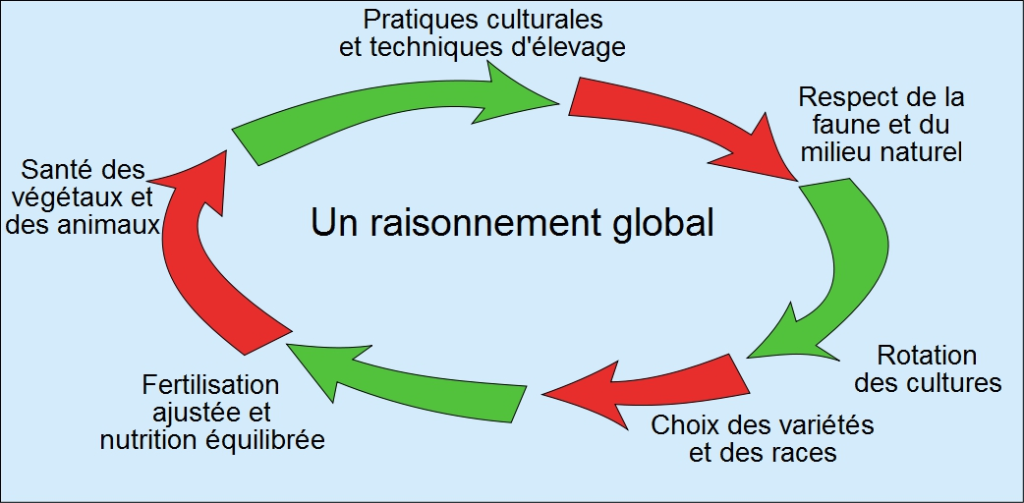
Sustainable agriculture is based on several fundamental pillars that guide the farmer's daily practices.
Use inputs in a targeted manner
The central principle is to adjust the doses and frequency of use of fertilisers, pesticides and veterinary products to the actual needs of the crops or animals. Rather than applying a systematic treatment according to a fixed schedule, the farmer relies on field observations, soil analyses and intervention thresholds to decide whether intervention is necessary, and to what extent. This is sometimes referred to as precision agriculture.
Prevention is better than cure
Before resorting to chemical treatment, the farmer in reasoned agriculture prioritises preventive methods: crop rotation to break the cycles of diseases and pests, selection of naturally resistant varieties, mechanical weeding, and maintaining a living soil capable of defending itself. These practices are part of a logic close to permaculture, which is inspired by the functioning of natural ecosystems to design sustainable farming systems.
Protecting natural resources
Sustainable farming places particular emphasis on the preservation of soils, water and biodiversity. This involves the establishment of grass strips along watercourses, the conservation of hedges and copses, limiting erosion through soil cover techniques, and the economical management of irrigation.
Ensuring quality and traceability
The process also includes a health component: the operator must ensure the traceability of their products and document their practices. The objective is to be able to justify every decision and guarantee the consumer a product whose history is known.
From reasoned agriculture to HVE certification
Although the concept of sustainable farming was officially recognised in 2002, the regulatory framework has since evolved. The designation «sustainable farming» was gradually phased out in favour of environmental certification for farms, which was established following the Grenelle de l'Environnement in 2007.
This certification works in three progressive levels.
Le Level 1 This corresponds to compliance with basic environmental regulations. It is the minimum foundation that any operation must respect. It does not grant any specific commercial benefits.
Le Level 2 requires the implementation of practices that go beyond legal obligations in several areas: input management, biodiversity and water management. It is this standard that has, in essence, captured the spirit of the former ‘sustainable agriculture’ certification.
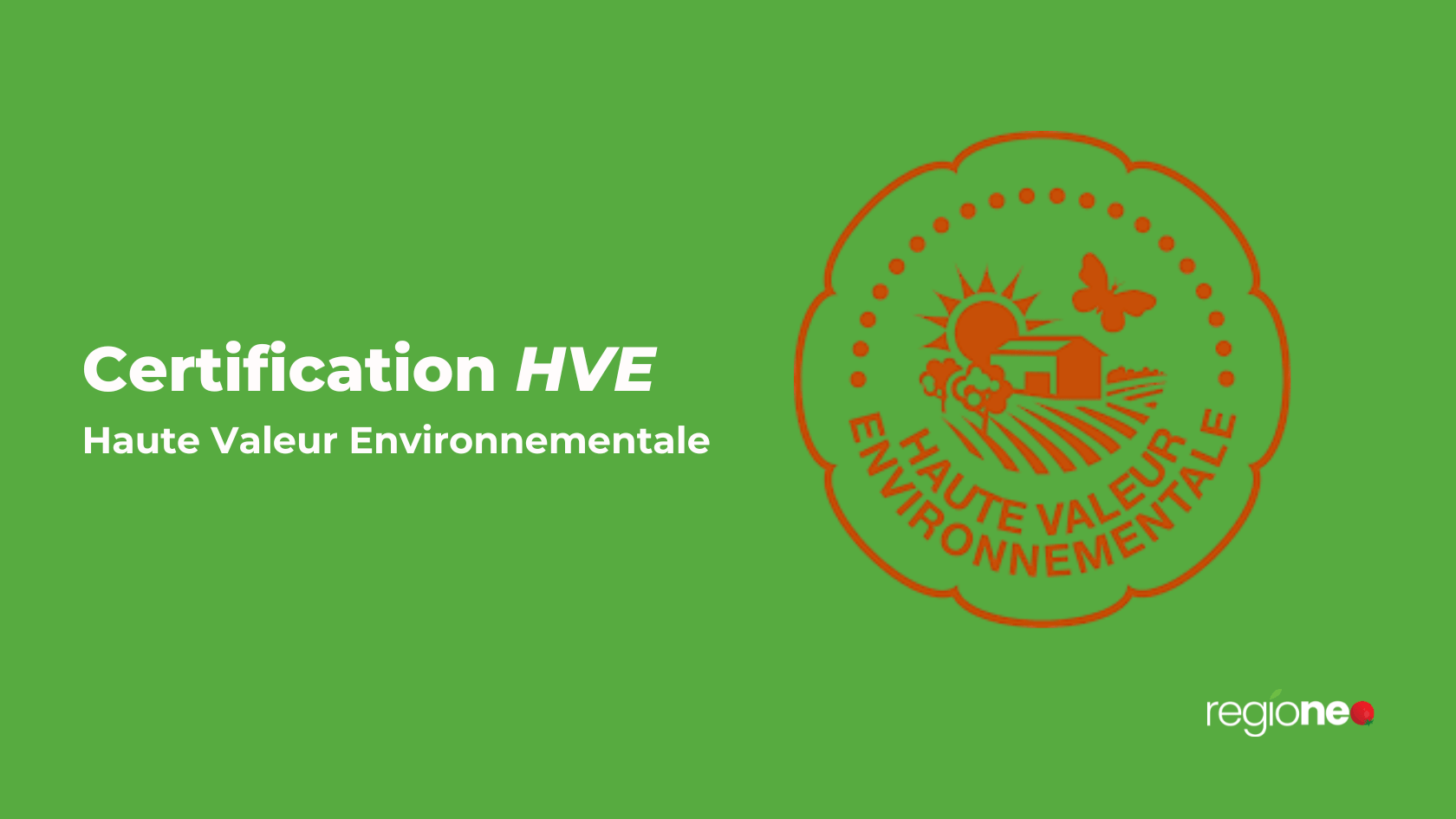
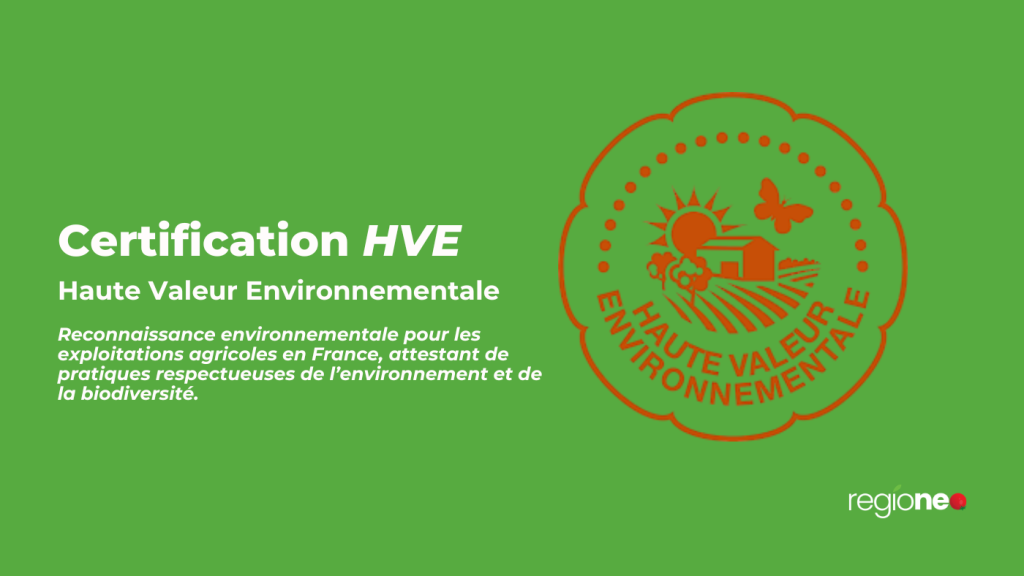
Le Level 3 is the best known: it is certification High Environmental Value (HEV). It is based on measurable performance indicators in four areas: biodiversity (maintenance of hedges, grass strips, groves), plant protection strategy, fertilisation management, and irrigation management. More than 35,000 farms were HVE certified in France in 2023, with a strong representation in the wine, fruit, and market gardening sectors.
To help you navigate the different food certifications, our article on main food labels detail each acronym and what it actually guarantees.
Sustainable farming vs organic farming: what are the differences?
This is the question many consumers are asking, and confusion is common. Both approaches share a desire to reduce farming's impact on the environment, but they don't work in the same way or to the same standard.
What fundamentally distinguishes them
Organic farming, governed by a European regulation (EU 2018/848), Forbidden the use of pesticides and synthetic chemical fertilisers, as well as GMOs. This is an obligation of results, verified by annual checks by approved certification bodies. The AB label or the European star leaf guarantees this compliance.
Sustainable agriculture, on the other hand, does not forbid Synthetic chemicals. It encourages their reduced use and targeted application, but their use remains permitted when the farmer believes there is no effective alternative. This is an obligation of means, not of results. The aim is to do better than conventional farming, but without reaching the constraints of organic farming.
What this changes for the consumer
In practice, a product from integrated farming or certified High Environmental Value (HVE) can contain residues of synthetic pesticides, which is not the case for an organic product. HVE certification applies to the entire farm (its practices, its agroecological balances), whereas the organic label applies to the product and the entire processing sector.
However, the two approaches are not opposed. A farm can, moreover, be certified organic and HVE (High Environmental Value) at the same time, with the two processes being complementary. Many producers in Crown Court they practise sustainable farming without labels, with significant efforts on pesticides, crop rotation and biodiversity. It is by interacting directly with them, during direct sales, that one can understand their practices beyond the logos.
At a glance
| Criterion | Sustainable agriculture / High Environmental Value | Organic farming |
|---|---|---|
| Chemical pesticides | Authorised, reduced and targeted use | Forbidden |
| GMO | Authorised | Forbidden |
| Synthetic fertiliser | Authorised, optimised dosage | Forbidden |
| Regulatory framework | French environmental certification | European Regulation |
| Type of obligation | Means | Results |
| Logo recognised | HVE (Level 3) Logo | AB logo / EU star-patterned sheet |
| Certification relates to | exploitation | The product and the sector |
To further understand labels and value claims, particularly the difference between AOP and AOC, please do not hesitate to consult our dedicated guide.
The advantages of sustainable farming
Despite the criticism it faces, sustainable farming has several advantages, for farmers, consumers, and the environment alike.
For the farmer
Optimising inputs helps to reduce production costs. By using fewer chemicals and precisely adjusting fertilisation to the soil's needs, the farmer makes savings that can be reinvested in more sustainable equipment or methods. Crop rotation and cover crops improve soil fertility in the long term, which secures future yields.
The approach is also more accessible than organic farming. The transition to organic farming often involves a conversion period of two to three years (without benefiting from the label during this time), temporarily lower yields, and high certification costs. Sustainable farming allows for a more gradual evolution, making it realistic for a greater number of farms.
For the environment
Although the gains are less spectacular than in organic farming, sustainable farming practices can reduce the use of certain inputs by 20 to 40 %, depending on the crops and circumstances. The preservation of hedgerows, wetlands and ecological corridors helps to maintain biodiversity. And sustainable water management limits the withdrawal of water from groundwater aquifers.
For the consumer
Products from sustainable farming are generally sold at a more accessible price than organic products, while still offering superior quality to that of conventional, non-certified farming. Buying these products in circuit court direct from the producer also allows for the reduction of intermediaries and supports local, responsible farming.
Limitations and criticisms
It would be incomplete to talk about reasoned agriculture without mentioning the criticisms levelled against it, which are often legitimate.
A term without a strict framework today
Since the disappearance of the official «reasoned agriculture» qualification and its replacement by environmental certification, the term has become vague. Many actors use it in their communication to signify that they «pay attention» to the environment, without this being backed by a verifiable specification or by controls from a third-party organisation. Consumers must therefore remain vigilant and distinguish what is certified (HVE, AB) from what is marketing discourse.
Requirements sometimes deemed insufficient
The HVE label itself is the subject of debate. Several NGOs and researchers point out that it is possible to obtain certification without a significant reduction in pesticide use. The French Office for Biodiversity has in fact been tasked with evaluating the actual environmental performance of the scheme, and the criteria were tightened in November 2022 in response to these criticisms.
A risk of confusion with organic
For the consumer in a hurry, the distinction between HVE (High Environmental Value) and organic is not always clear. Both logos coexist on the shelves, and the former can be mistakenly perceived as offering the same guarantees as the latter. That's why it's useful to familiarise ourselves with the main food labels to make informed choices.
How to recognise a product from reasoned agriculture?
On the shelves or at a market stall, here are the concrete points to guide you.
Look for the HVE logo on the packaging. This is currently the only official and certified indicator that attests to verified environmental practices on the farm. It takes the form of a green logo with the mention «From a high environmental value farm».
Beware of the Vague mentions such as «reasoned agriculture», «environmentally friendly» or «sustainable» without reference to a clear specification or a certifying body. These terms are not legally binding.
On a short circuit, Ask the question directly To the producer. Ask them how they manage treatments, if they practice crop rotation, and how they maintain biodiversity on their farm. Committed producers are generally delighted to share their practices.
And generally, learn to decipher the dates and labels on the products you buy. For example, the Expiry date and best before date is essential to avoid throwing away food that is still perfectly edible.
In summary
Sustainable farming is a common-sense approach that aims to produce more responsibly, by reducing the use of chemical inputs and protecting natural resources, without going as far as organic farming. While the official qualification has disappeared, its spirit can be found in environmental certification and notably in the HVE label.
For the consumer, the best way to get by remains to inform oneself about the labels, to favour short supply chains when possible, and to talk to the producers. It is by understanding what lies behind each product that the best choices are made for one's health, for the environment, and for the local economy.