


Are you a producer looking to highlight your environmental practices to your customers, access new markets, or benefit from the CAP's eco-schemes?
La High Environmental Value (HEV) certification is probably the most suitable approach for your situation. But you still need to know where to start. We have detailed the steps to follow, from the preparation of your operation to obtaining and renewing this valuable certificate.
Reminder: what HVE certifies
HVE certification attests that a farm achieves a high level of environmental performance in four areas: the preservation of biodiversity, the reduction in the use of plant protection products, the reasoned management of fertilisation, and the optimisation of water resources.
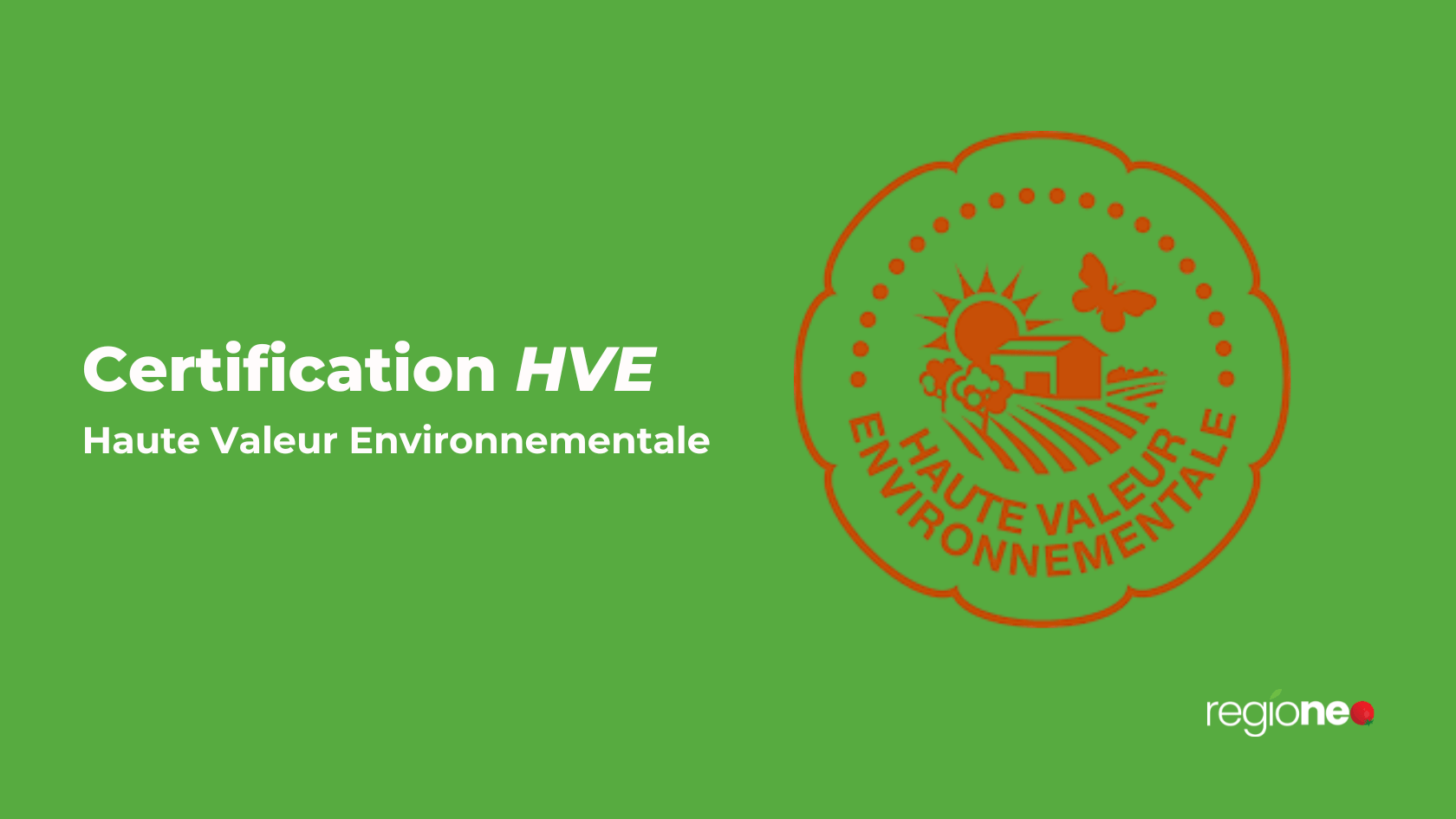
It covers the entire farm, crops, livestock, the environment of the plots, and not a particular product. Only the Level 3 certification entitles the holder to the «High Environmental Value» designation and the use of the HVE logo. To fully understand the difference between levels 1, 2, and 3, consult our dedicated article: The 3 levels of HVE certification.
Step 1 – Assess your farm's situation
Before embarking on the certification process, it is essential to carry out a Inventory of your current practices with regard to the requirements of the HVE (High Environmental Value) framework. This preparatory phase, often underestimated, is crucial for the success of the audit.
The starting point is to assess your farm on the four themes of the framework: biodiversity, plant protection strategy, fertilisation, and water management.
The Chambers of Agriculture offer self-assessment grids adapted to different sectors. Certain digital decision-support tools (DSTs) also allow you to assess your indicators continuously and monitor your progress.
Step 2 – Choosing between an individual or collective approach
The HVE certification can be obtained through two methods, each with its own advantages.
The individual path
The operator prepares their file and directly contacts an accredited certification body. They will handle the entire process and associated costs. This route is suitable for operations that already have good control over their practices and rigorous documentary monitoring.
The collective path
An external body, cooperative, producer group, chamber of agriculture, or sector association coordinates the initiative for a group of farms. The body supports producers in the preparation, pools costs, and involves a certification body for the entire group.
In practice, nearly 70 % of HVE-certified farms pass through a collective framework. This approach is particularly interesting for producers embarking on the process for the first time, as it offers technical support and the sharing of experience among peers.
Step 3 – Select a certification body
The certification audit must be carried out by a accredited certification body (CB) by the National Environmental Certification CommissionCNCE, which itself is attached to the Ministry of Agriculture.
Among the best-known accredited bodies are AFNOR Certification, Bureau Veritas, Certipaq, Certis and Ocacia. The complete and up-to-date list of accredited bodies is available on the Ministry of Agriculture's website.
A few tips for choosing your certification body:
- Compare the prices. The cost of the audit varies depending on the organisation, the size of your farm, and its complexity. It is recommended to ask several quotes.
- Check the geographical coverage. Some organisations have a network of auditors spread across the territory, which facilitates planning and can reduce travel costs.
- Find out about combined audit possibilities. If your operation is already involved in other certification schemes (organic farming, GlobalGAP, IFS), some organisations offer combined audits to optimise costs and time.
Step 4 – Implement the necessary actions
Between self-diagnosis and an audit, it may be necessary to implement Corrective actions to meet the required thresholds for each theme. Each indicator in the HVE repository is scored, and the farm must obtain a minimum 10 points per theme To validate the certification.
On biodiversity
Plant or maintain hedges, maintain grass strips, create refuges for beneficial wildlife. The presence of agroecological infrastructures (AEI) is a central criterion of the framework. The larger the area of your farm dedicated to these elements, the higher your score will be.
On the plant health strategy
Adopt alternative methods: biocontrol, mating disruption, crop rotation, field observation before any intervention. The aim is to demonstrate an effective reduction in the frequency and intensity of treatments, measured in particular by the Treatment Frequency Index (TFI).
On fertilisation
Rely on regular soil analyses, establish balanced fertilisation plans, and document your inputs. The challenge is to prove that your nitrogen, phosphorus, and potash applications are calibrated to the actual needs of the crops, without excess.
On water management
If your farm irrigates, implement precise monitoring of the volumes used and water requirements. Installing tensiometers, using irrigation bulletins, or specialised decision support tools is an asset for justifying reasoned management.
Step 5 – Pass the certification audit
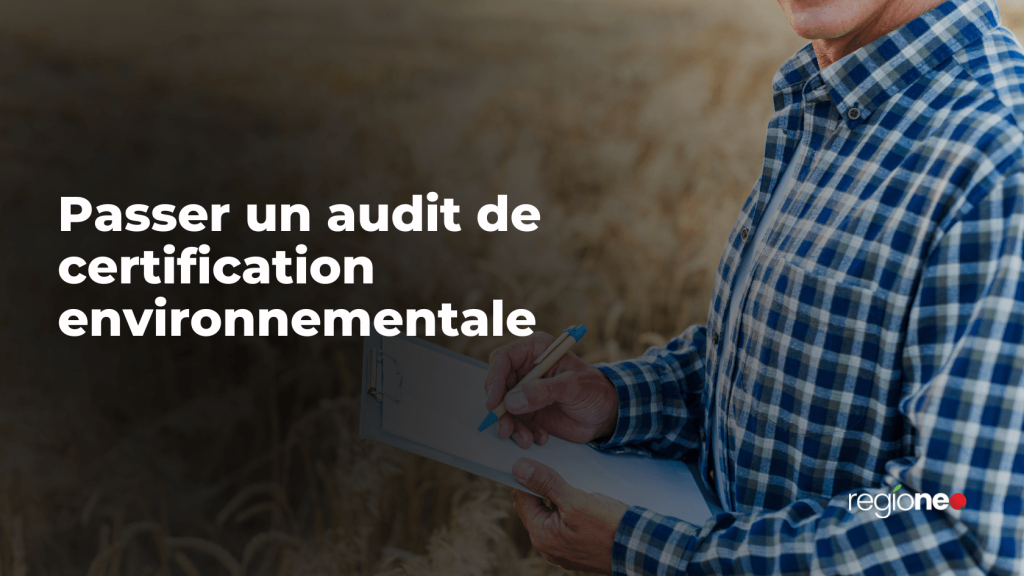
When you feel your operation is ready, schedule an audit date with the certification body.
The audit process
The HVE audit generally takes place over a half-day to a day, depending on the size and complexity of the operation. It comprises two parts:
A documentary section. The auditor examines your records, fertiliser plans, plant health register, irrigation records, input invoices, and any supporting documentation. Prior to their visit, they will send you a list of the documents to prepare.
A field check. The auditor walks around the farm to verify on-site the consistency between the documents and reality: effective presence of hedges and declared landscape elements, condition of crops, irrigation infrastructure, storage of plant protection products.
The scoring system
Since the entry into force of version 4 of the framework (1 January 2023), HVE certification is exclusively based on the Way A, based on environmental performance indicators. The old track B, which allowed certification based on economic indicators (share of inputs in turnover), has been removed.
For each of the four themes, the farm receives a score. Certification is granted if each theme achieves minimum threshold of 10 points.
In case of non-compliance
If the audit reveals discrepancies, the certification body may ask for corrective actions before issuing the certificate. This is not necessarily a definitive failure: in some cases, targeted adjustments are sufficient to meet the required thresholds during a follow-up audit.
Step 6 – Obtaining and using the HVE certificate
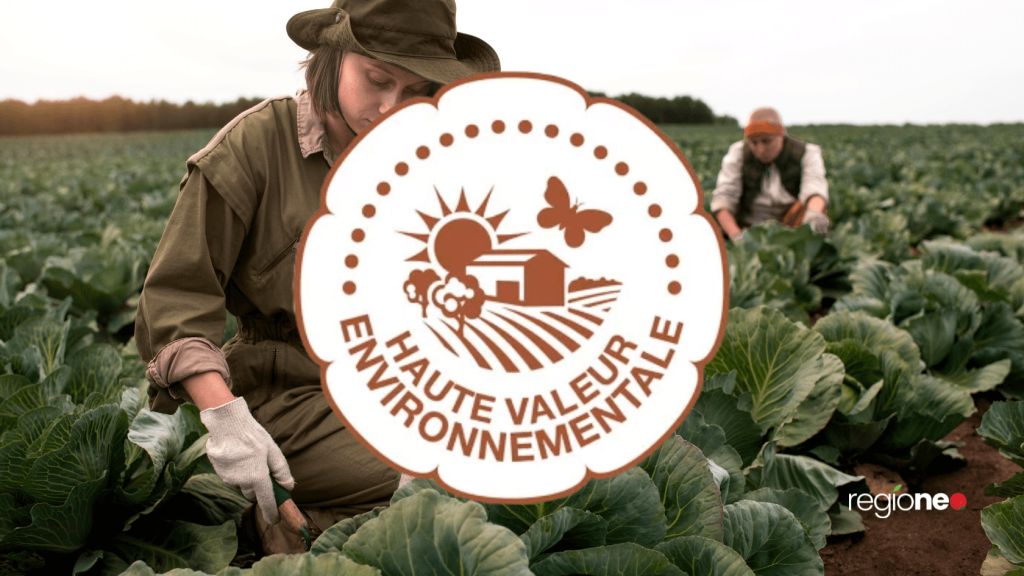
Once the audit has been approved, the certifying body will issue you a HVE certificate valid for 3 years. The timeframe between the audit and receiving the certificate is generally a few weeks.
The certificate authorises you to use two official logos:
The logo «High Environmental Value», intended to showcase the farm itself on your communication channels: website, market stall, commercial documents.
The logo «From a High Environmental Value farm», which can be affixed to the finished products containing at least 95 % of raw materials sourced from HVE-certified farms. This logo may also be used by processing, distribution and marketing operators without prior authorisation, provided that the 95 % requirement is met.
For producers using short supply chains, these logos represent a powerful differentiation tool.
Step 7 – Maintain and Renew Certification
HVE certification is not a definitive achievement. It is part of a logic of’continuous improvement.
Over the 3-year cycle, a Follow-up audit (or interim audit) is carried out by the certification body. Depending on the organisations, this audit generally takes place no later than 10 months before the certificate's expiry date. It serves to verify that practices are maintained and that the farm continues to meet the thresholds.
The renewal
At the end of the 3-year period, a renewal audit completion must be carried out, at the latest 3 months before the certificate expires. The procedure is similar to the initial audit: documentary verification and an on-site visit. If the thresholds are still met, a new 3-year certificate will be issued.
Financial aid for HVE certification
Undertaking certification represents an investment in time, adaptation of practices, and audit costs. This is why several schemes exist to provide financial support to farms.
The CAP eco-schemes 2023-2027
Within the framework of the new CAP, farms certified HVE (Level 3) have access to higher level of the eco-scheme «environmental certification», or approximately 82 €/ha paid out over all eligible hectares of the holding.
Regional aid and other schemes
Certain regions cover all or part of the audit costs, particularly within the framework of collective support programmes. Tax credits have also been introduced at national level for farms certified HVE.
Enquire with your Chamber of Agriculture or cooperative about the schemes available in your region.
The exemption from the plant health strategic advice
Farms certified High Environmental Value are exempted from the obligation of strategic plant health advice (CSP), made mandatory since 2021 by the EGAlim law. This exemption represents a significant saving in time and costs, as the CSP involves two paid consultations over a period of 5 years.
In summary: the key steps
The path to HVE certification can be summarised in seven key stages: carrying out a self-assessment of your practices, choosing between an individual or collective approach, selecting an accredited certifying body, implementing the necessary actions to meet the thresholds, undergoing the certification audit (documentary and on-site), obtaining the certificate and using the HVE logos, and finally, maintaining your performance and renewing the certification every 3 years.
It is a demanding but structuring approach. It gives a clear framework to the agroecological transition and concretely values producers' efforts with consumers, distributors and public authorities.