

In a world where shelves are brimming with virtuous promises, knowing how to decipher food labels has become essential for making truly healthy and responsible choices. Colourful logos, reassuring claims, official ratings, and symbols are multiplying on packaging, but they don't all guarantee the same thing or the same level of scrutiny.
Between the origin of the product, production methods, nutritional quality or environmental impact, it is often difficult to navigate.
Understanding what each label actually corresponds to, who issues them, and what they concretely imply not only allows for better consumption but also for better valuing of products, especially for producers in short supply chains.
What is a food label?
One Food label is a mark of recognition that certifies a product meets precise, pre-defined criteria. These criteria are formalised in a specification document (or standard), to which the producer commits.
This framework sets out the rules for production, processing, and sometimes geographical origin. It is supplemented by regular checks, carried out by independent bodies, as well as strict labelling rules.
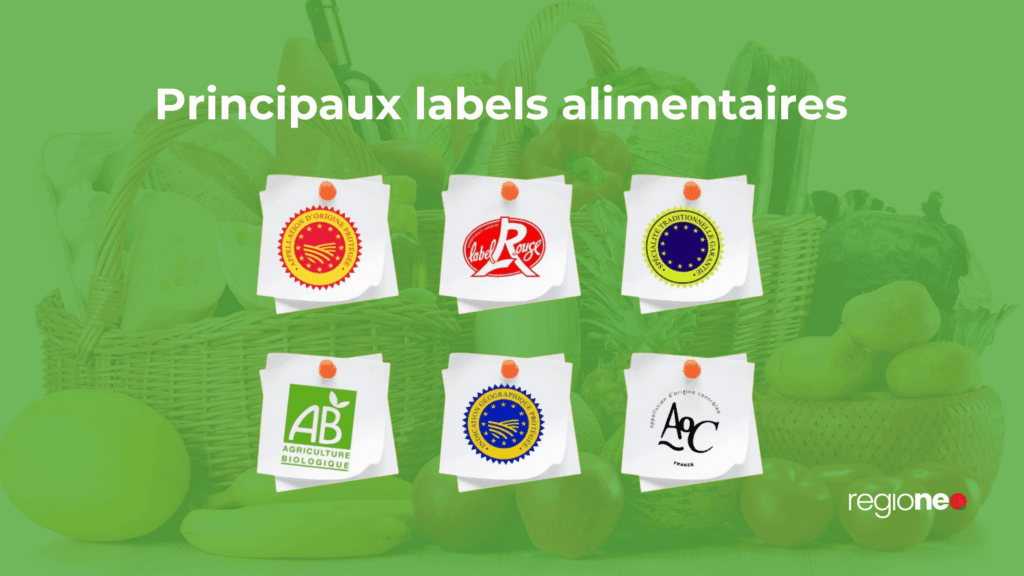
In France, a large proportion of the most well-known labels are grouped in the SIQO (Official signs of quality and origin identification), overseen by the INAO (Institut National de l’Origine et de la Qualité - National Institute of Origin and Quality). This includes in particular PDO/AOC, PGI, Label Rouge, Organic Farming, and TSG.
On the other hand, not every logo placed on packaging is necessarily an official label. You will also find:
- des private labels supported by associations or sectors,
- des Framed mentions (for example «mountain product»),
- des information tools (like Nutri-Score) which help to compare, but do not certify an origin or know-how.
What are food labels used for?
A label first serves to create a Trust shortcut. The consumer doesn't have time to visit every farm, check every practice, or compare every technical data sheet. The logo becomes a guaranteed promise.
For buyers, labels help to:
- to spot Origin (terroir, geographical area),
- Choose one production method (biography, tradition, brief),
- aiming for Superior quality or precise criteria,
- avoid confusion on the label (and sometimes avoid waste).
For producers, the interest is often very concrete:
- better to value a product (and defend a price),
- be differentiate in a market where everything looks the same,
- access certain sales channels (catering, institutions, grocery stores),
- to structure a sector, with common rules and name protection.
However, labels also have their limitations. The proliferation of logos can obscure understanding, and no single label can encapsulate all the dimensions of a product. In Direct sales and short supply chains, labels can provide reassurance and structure discussions, but they do not replace the exchange, transparency and the producer's ability to clearly explain their choices.
Also discover our article on the Anti-waste label.
What are the different food labels?
We come across many acronyms, but the most useful benchmarks remain the main SIQOs, with quite different guarantees. Here is a quick overview, then we'll go into detail.
| Signe | What he highlights | Simple idea to remember |
|---|---|---|
| Label Rouge | Superior quality | «Better than the current product» |
| AOC / AOP | Terroir and expertise at every stage | «everything is linked to the place» |
| IGP | Link to a zone, at least one key stage | «Linked to the origin, but more flexible» |
| STG | Recipe or traditional method | «Tradition, not necessarily a place» |
| AB (organic) | Organic production method | « biological, framed, controlled » |
Label Rouge
Red Label indicates a Superior quality compared to a comparable product on the market. This can relate to meats, cured meats, eggs, honey, certain fish, fruits and vegetables, and also processed products.
This label is based on a code of practice overseen by the INAO, with official approval. When it comes to labelling, there's a clear rule: if you display the Red Label, you must add the mention «guarantee of superior quality», and state your approval number.
To apply for the Label Rouge, the process often involves a collective effort, through a Defence and Management Organisation (ODG). As for combining labels, there is a useful rule to bear in mind: a product with PGI or TSG status can also carry the Label Rouge, whereas a product with PDO or AOC status is not eligible for it.
Organic Farming (AB)
Le Organic Farming (AB) identifies products sourced from supervised practices aimed at limiting environmental impact and preserving biodiversity and to comply with strict rules on animal husbandry and animal welfare.
It is based in particular on the prohibition of synthetic pesticides and fertilisers, GMOs (beyond very low thresholds) and on specific requirements concerning animal feed, veterinary treatments and crop rotation.
For processed products, at least 95 % of the agricultural ingredients must be sourced from organic farming, with the remaining 5 % being subject to and listed in accordance with European regulations.
The AB certification falls within a common European regulatory framework, with regular checks carried out by accredited certification bodies (such as that Ecocert, Certipaq Bio, Agrocert Or Quality France, depending on the sectors and territories).
On the packaging, you can find the historically recognisable French AB logo, as well as the European organic logo, called the «Euro-leaf», which attests to compliance with Community rules.
Two useful points in direct selling:
- Bio does not mean «local».
- Organic doesn't sum up all the taste quality, but it is a benchmark for the production method.
Appellation d’Origine Contrôlée (AOC)
L’Protected Designation of Origin (AOC) designates a product whose characteristics are inseparable from its region of origin and recognised expertise.
Sun, climate, local practices, and production techniques form a coherent whole: origin is not simply a geographical marker, it directly explains the product's typicality, its taste, and its quality. AOC thus fits into a logic of collective protection and recognition, historically French, governed by strict specifications.
The AOC is therefore based on a logic of collective protection and recognition, historically French.
With changes to the European regulatory framework, the AOC has, in most cases, become a national step towards the’Protected Designation of Origin (AOP).
In practice, the AOC logo is rarely used on products registered as AOP today, with the latter now being the reference mark. However, one exception remains: the wine sector, which continues to make extensive use of the AOC designation, which is firmly established in custom and public understanding.
Discover our article on the difference between AOP and AOC.
Protected Designation of Origin PDO
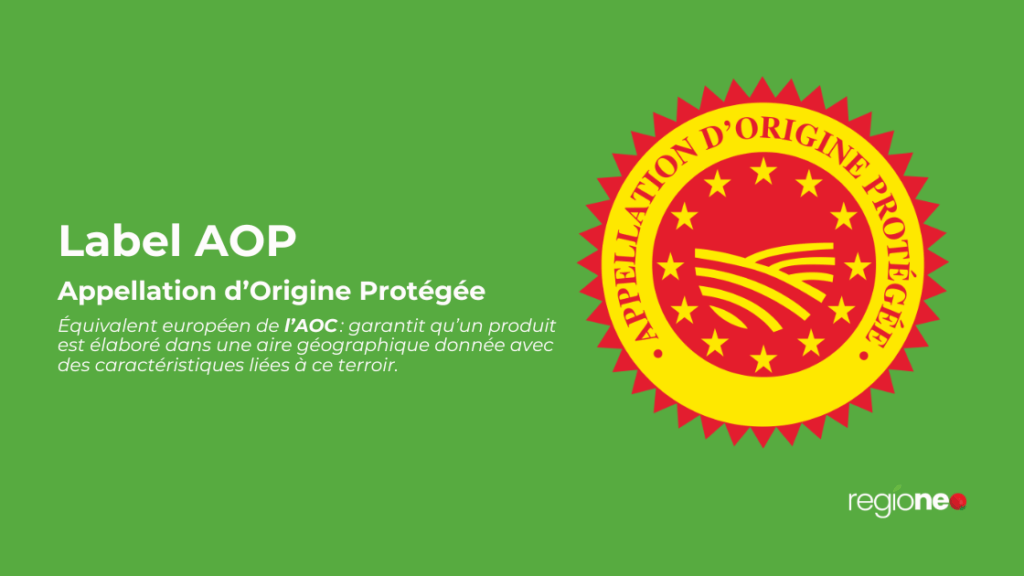
L’Protected Designation of Origin (PDO) is the European recognition of this same original logic and know-how. It guarantees that a product is entirely produced in a defined geographical area and that all essential stages of production and processing comply with recognised and controlled know-how.
For producers, the PDO also constitutes a tool for protecting the name. When a product becomes renowned, this protection helps to prevent imitations or abusive uses that could strip the designation of its meaning and penalise those who respect the rules.
The process of obtaining it most often relies on an Organisme de Défense et de Gestion (ODG - Defence and Management Organisation) and on demanding collective work, which takes time but in return offers a stable and sustainable framework for the long-term valorisation of a product.
Traditional Speciality Guaranteed (TSG)
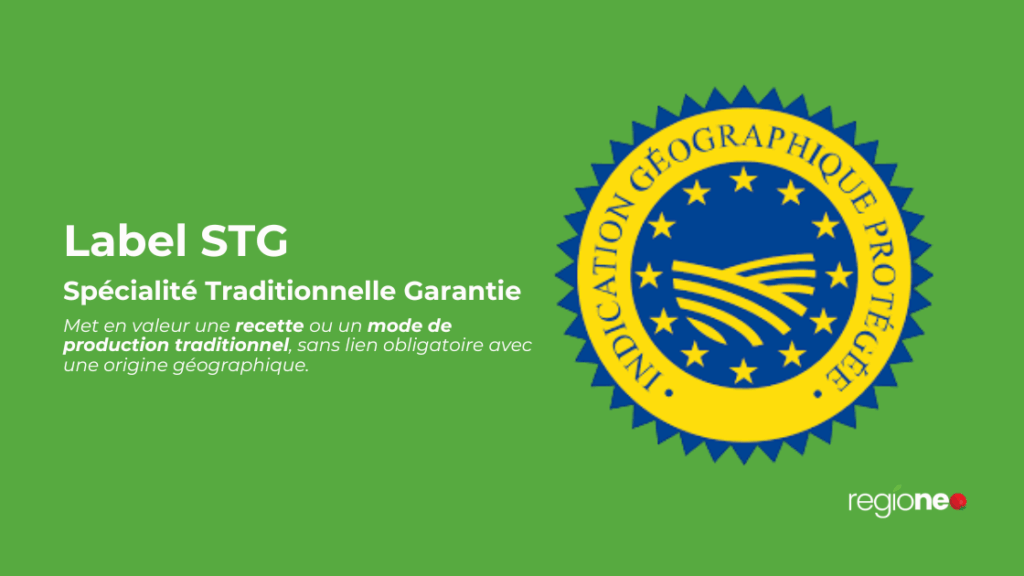
La Traditional Speciality Guaranteed (STG) is an official mark that is still little known in France, but which answers a very practical question: does this product respect a recognised traditional recipe or method?
Unlike PDO or PGI, TSG does not protect a geographical area, but rather a method of production. The distinctive character of a TSG is based on two key criteria: the Product specificity and its traditional character.
It aims to recognise manufacturing methods or processing data transmitted over time, regardless of the place of production.
This label is particularly relevant when craftsmanship is the product’s main value, whilst its regional roots are less of a determining factor.
Protected Geographical Indication (PGI)
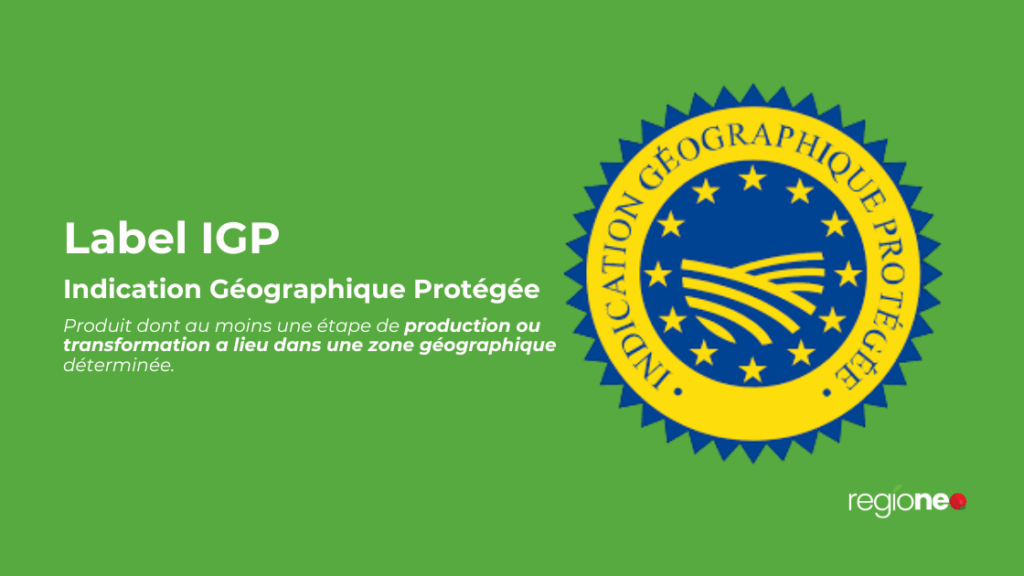
L’Protected Geographical Indication (PGI) identifies agricultural products, whether raw or processed, whose quality, reputation or certain characteristics are linked to a specific geographical origin.
Unlike a AOP, the link to the region is genuine but less exclusive: it is not based on the entire production process, but on at least one key stage carried out in the area in question.
PGI is based on a set of specifications approved by INAO, generally less restrictive than those for a PDO or AOC, but nevertheless regulated.
Finally, it should be noted that the IGP cannot be held in conjunction with either the AOC or the AOP, as these designations are based on different criteria for establishing a link to the place of origin.
Other useful labels (HVE, Origin’Info, Nutri-Score, Éco-Score, «mountain product»)
As well as SIQO, there are other guidelines to help you choose, although these are not always certification schemes.
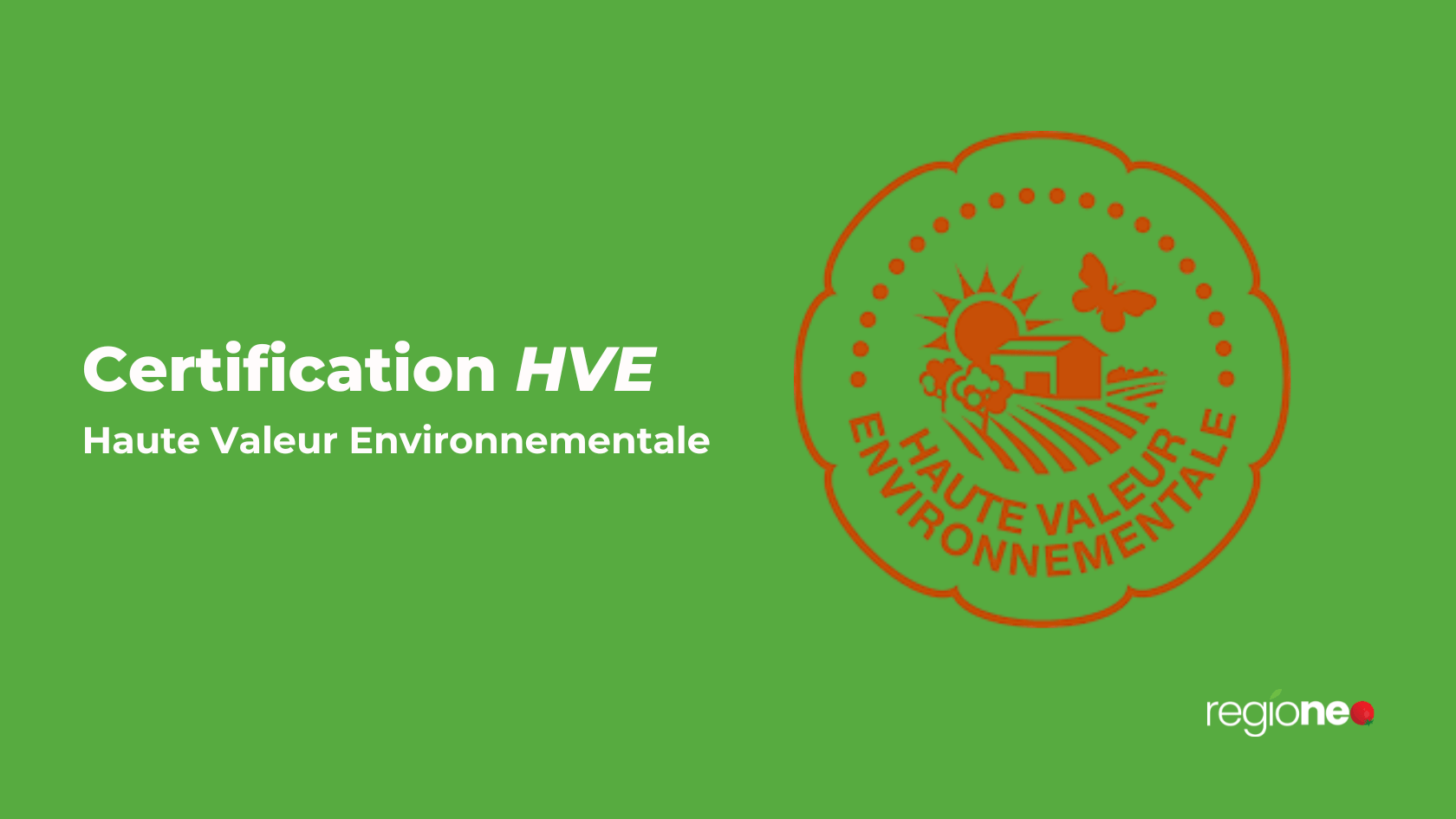
- HVE (High Environmental Value) : This is a farm-wide certification scheme. It promotes practices that better conserve resources (soil, water, biodiversity) and reduce certain pressures. The focus here is on overall environmental performance, not on the origin of the produce.
- Origin’Info : recently rolled out, it's a transparent approach to the origin of the main raw materials. Useful for processed products, where the origin of the main ingredient is often the real question.
- Nutri-Score : a rating from A to E for overall nutritional quality. It is a tool for comparison, not a regional label.
- Eco-Score : a voluntary environmental indicator that seeks to summarise the overall impact (transport, packaging, emissions, etc.). It helps with comparisons, but it also depends on the data available.
- Boxed notes as a «mountain product»: they promote a specific area and production conditions, subject to specific rules.
For a fruit and vegetable grower, these guidelines often complement the essentials: season, freshness, variety, and clearly explained best practices. And for those working to reduce food waste, the label is only part of the story.
How do I get a food labelling?
Obtaining a food certification is a transformative project that requires a long-term commitment to best practice, organisational structure and transparency.
Depending on the scheme chosen, the process may be carried out on an individual basis, but it is often a collective endeavour, particularly for official schemes such as SIQO, through a Defence and Management Organisation (ODG).
In most cases, the process is structured around the following key stages:
- Choosing the right label
Geographical origin, production method, tradition, superior quality… the right label depends on the product, the sector and what one actually wishes to highlight.
- Review the specifications (guidance document)
It sets out the rules: permitted practices, traceability, monitoring requirements and labelling rules. Committing to it means being able to comply with these rules over the long term.
- Put together the application pack
Descriptions of practices, proof of conformity, organisational information, production or processing methods, areas concerned and, where applicable, technical analyses or documents.
- Pass the certification audit
An accredited certification body verifies compliance on site. If the assessment is positive, the label is awarded, with regular checks thereafter.
- Care for the labelling
Each label requires precise information: the official logo, any mandatory mentions, and approval numbers. An error at this stage could jeopardise certification.
Difference between an official and a private (unofficial) label
The most useful distinction is not «good or bad». It is: Who sets the rules, who controls, and how is it verified.
- One Official label (often SIQO) is overseen by a public scheme, with specifications, certifying bodies, and controls. It provides a robust, widely recognised structure.
- One private label It is run by an association, a brand, or a sector. It can be very demanding, very serious, and sometimes more understandable to the public. But the rules, the level of control, and the recognition vary a lot.
From a consumer perspective, the good habit is to look for three elements: a public registry, an identified supervisory body, and concrete criteria (not just values).
From the producers' perspective, another question is important: does this label reflect your day-to-day reality, and what you can simply tell customers during direct sales? In short supply chains, consistency sells. A customer will forgive a misshapen carrot, but not a vague promise.
Another very practical point: reducing waste. It's not a quality label, but it has become a criterion of trust. Better management of dates and stock helps as much as any logo. To sort through dates and avoid throwing things away, this guide is useful: Understanding the difference between DLC and DDM.
FAQ
Why do experts disagree on the environmental impact of PDO and organic labels?
Because the PDO primarily protects the origin and the know-how without guaranteeing a low ecological impact, whereas the organic certification governs agricultural practices but does not cover all environmental criteria such as transport or land use.
What is the difference between AOP and IGP?
The AOP requires all stages to take place within the same geographical area, whereas the IGP only requires a minimum of one stage to take place there, making it a less strict label.
Voici quelques exemples connus de produits AOP en France : **Fromages :** * Comté * Roquefort * Camembert de Normandie * Brie de Meaux * Chèvre (comme le Crottin de Chavignol, le Valençay, le Pouligny-Saint-Pierre) * Reblochon * Beaufort **Viandes, charcuteries et produits de la pêche :** * Jambon de Bayonne * Porc de Bigorre * Agneau de Pauillac * Truite de rivière de France * Huître Marennes-Oléron **Fruits, légumes et céréales :** * Ail de Billom * Marrons glacés de l'Ardèche * Céréales de la Beauce (pour certains types de blé, par exemple) * Poireaux de la Beauce **Huiles et vinaigres :** * Huile d'olive de Nyons * Vinaigre de vin de Bourgogne **Autres :** * Sel de Guérande * Miel de Corse (Miel de maquis de Corse)
Iconic products such as Roquefort, Comté, Brie de Meaux, Nyons olives, Puy green lentils, Camargue rice and Grenoble walnuts are among the most famous AOPs.