


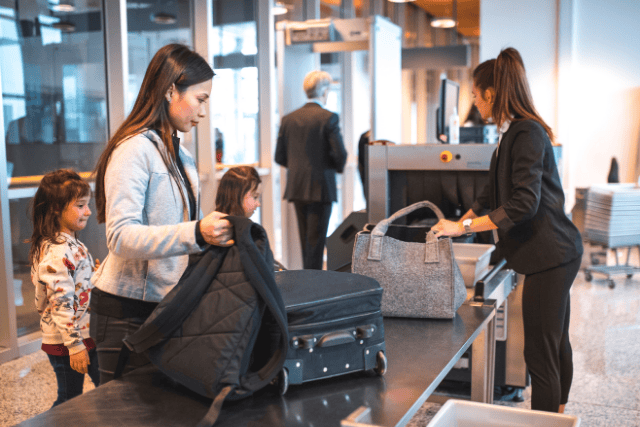
Every day, many Food products, cosmetics or items of any kind are confiscated at airport security checks. The media 20 minutes recently published an article on the fate of confiscated goods. At Nantes Atlantique, this represents between 150 and 300 kilos per week. Long thrown away, these items now have a second life thanks to a partnership with the Restos du Cœur.
This Anti-waste solution It meets a need: to limit food waste while supporting solidarity actions. It is part of a broader movement, just like direct-from-producer fruit sales, anti-waste food boxes, and short-circuit fruit and vegetables. A simple solution to wastage that has long been ignored in airports.
A collection at security checks
Safety regulations prohibit the boarding of liquids or certain foods. As a result, jars, jams, tinned goods, fruits, vegetables, or cheeses are regularly confiscated. the airport Nantes Atlantique, these products represent several hundred kilos per week, with a majority of food that is still perfectly edible.
Some even come directly from local producers, from farms selling produce directly to consumers or through short supply chains, and end up on security agents' sorting belts. For a long time, they were simply destroyed, despite their nutritional quality and freshness.
Giving products a second life: circular logic
Since 2023, Nantes Atlantique Airport has been working with the Restos du Cœur to give a new purpose to these seized goods. When passengers do not wish to have them reshipped or collected, these products are kept for three months, and then automatically handed over to the association.
Every week, volunteers come to collect foodstuffs, sometimes of artisanal or agricultural origin. This gesture is a continuation of the Anti-waste law of 2020, which prohibits the destruction of edible food products.
The food collected then joins existing food distribution systems. Some products are incorporated into anti-waste fruit and vegetable baskets, while others are used to prepare meals for beneficiaries. A way to add value to food, sometimes from direct sales from producers, or even labelled organic or from sustainable agriculture.
Towards a generalization in all airports?
This initiative could be replicated in other airports. Nationally, the volume of confiscated food is considerable. By centralising collection and working with food aid networks, each airport platform could become a committed player in the fight against food waste.
This logic aligns with that of consumers turning to ugly fruit and vegetables, local markets, or indeed applications rescue of unsold stock. An initiative supported by the’rise of direct producer sales, which reconnects the power to its source.
Just like food surplus fruits and vegetables or end-of-market recovery baskets, confiscated airport food deserves a second life, by cleverly reintroducing it into a Solidarity and sustainable circuit.
A non-negligible environmental impact
Beyond the social issue, the recovery of confiscated food also limits the’carbon footprint generated by the transport and treatment of waste. Every fruit or vegetable saved from waste represents so many natural resources, energy and water saved. In a period marked by the ecological transition, this type of initiative makes perfect sense.
More and more local authorities and aviation sector stakeholders are questioning their role in reducing food waste. Consideration is being given to integrating systematic collection points, to better sort products, or to raise awareness among travellers not to carry certain types of perishable foods.
What seemed lost is no longer necessarily so. Food confiscated at airports can be eaten instead of being thrown away. By allowing these foodstuffs to reach the plates of those who need them, the Nantes Atlantique initiative gives a new meaning to food waste management. In line with practices already well established in certain regions, this approach could become the norm.
Waste less. Redistribute more. Make every bunch of grapes or jar of jam a gesture of food solidarity.